
As the temperature drops and the leaves crunch underfoot, there’s a unique comfort found in the warmth of a steaming bowl of Korean winter soup. Picture this: tender beef mingling with soft tofu, aromatic vegetables, and a rich, savory broth that envelops you like a cozy blanket. This dish isn’t just a meal; it’s a heartfelt experience meant to be shared, perfect for those chilly evenings when all you crave is something soul-soothing.
What’s delightful about this Korean winter soup is its versatility; with easy options for both meat-lovers and vegetarians, everyone can find their perfect bowl. Trust me, once you taste the layers of flavor in each spoonful, you’ll understand why this comforting classic leaves everyone reaching for seconds. So, let’s dive in and create a heartwarming dish that not only fills your belly but also warms your spirit!
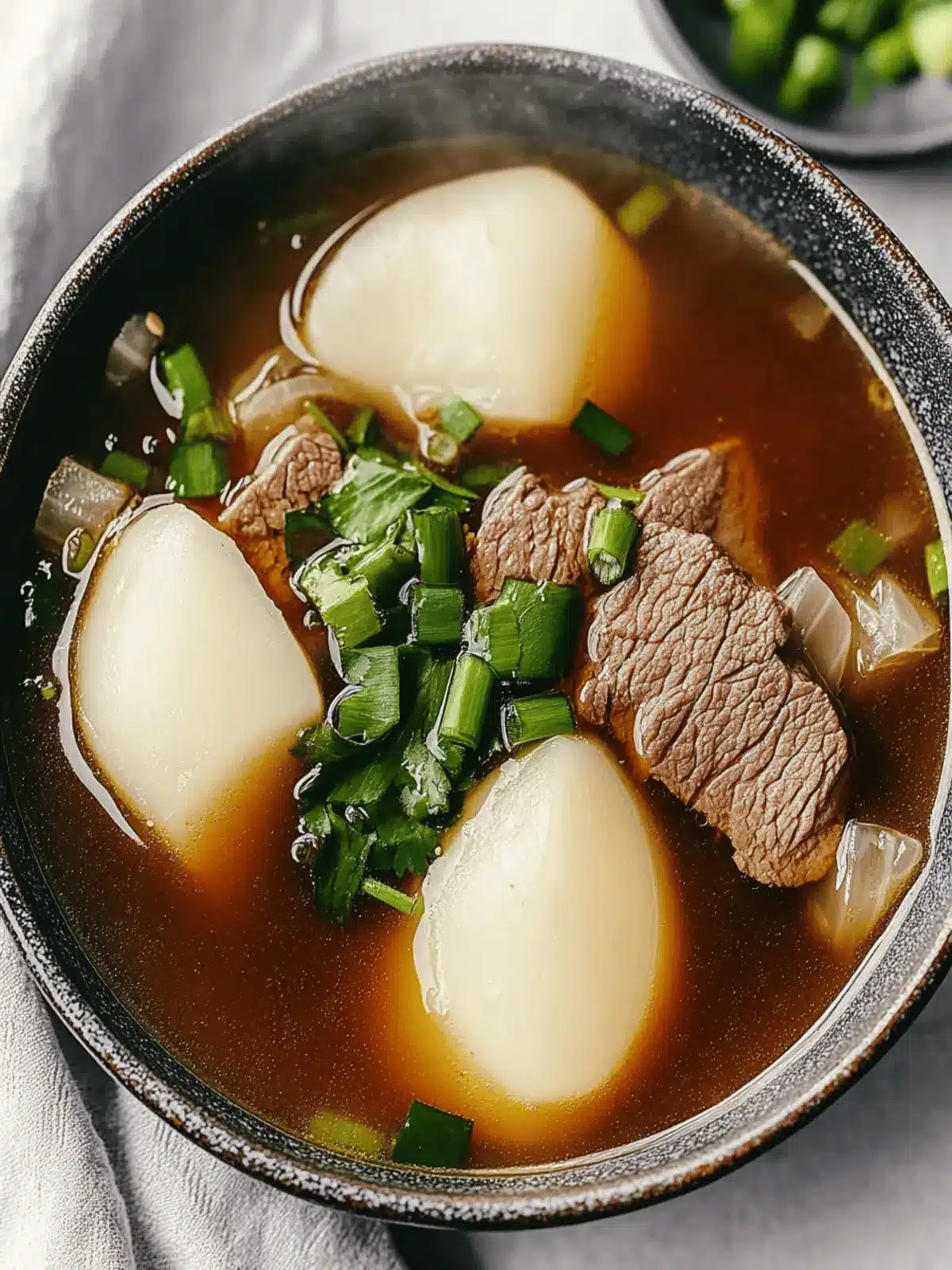
Why is Korean Winter Soup so special?
Comforting, heartwarming flavors fill each bowl, infusing your home with delightful aromas. Versatile options ensure that both meat lovers and vegetarians can enjoy this dish. Quick to prepare, it’s perfect for busy days when you crave something cozy. Nutritious ingredients provide a wholesome meal, rich in protein and vitamins. Culturally rich, it celebrates the warmth of Korean culinary traditions, becoming a family favorite in no time!
Korean Winter Soup Ingredients
For the Broth
- Beef short ribs – Adds richness and tenderness to the broth; for a vegetarian option, consider using large portobello mushrooms or seitan.
- Guk ganjang (Korean soup soy sauce) – Enhances the umami flavor of the soup; substitute with regular soy sauce and fish sauce for extra depth, or tamari for a gluten-free option.
For the Vegetables
- Korean leek – Provides a delicate aromatic flavor; you can substitute with regular leeks or a mix of green onions and chives.
- Radish – Enriches the broth with its subtle sweetness; feel free to adjust with seasonal veggies like carrots or cabbage.
- Garlic, onion, green onions, and ginger – All work together to create a fragrant base and enrich the nutrition of the dish.
For the Tofu
- Tofu – Offers protein and a creamy texture; use firm tofu for added structure or omit it entirely for a meat-free soup.
Indulge in the comfort of this Korean winter soup that blends cozy flavors with wholesome ingredients, perfect for cold nights or shared meals!
How to Make Korean Winter Soup
-
Soak Beef: Begin by soaking the beef short ribs in cold water for about 1 hour. This step helps remove excess blood and ensures a cleaner broth. Optional: For an extra cleanse, flash boil the ribs, discard the liquid, and then boil again.
-
Prepare Aromatics: While the beef soaks, prepare the aromatics. Leave the onion skin on for added flavor, and chop the ginger, garlic, and green onions (including the roots if you have them on hand) to infuse the broth.
-
Combine Ingredients: In a large pot, combine the soaked beef ribs, prepared aromatics, and 10 cups of water. Bring the mixture to a boil over high heat, watching carefully as it begins to bubble.
-
Simmer the Broth: Once boiling, reduce the heat to medium. Skim off any foam that rises to the surface, then lower the heat to medium-low and allow the broth to simmer uncovered for about 1 hour, letting those flavors meld beautifully.
-
Add Radish: After an hour, introduce the radish slices into the pot, then continue to simmer for an additional 20 minutes until the radish becomes tender and infused with flavor.
-
Season the Soup: Once the radish is tender, remove the aromatics from the pot. Season the soup with guk ganjang, sea salt, and chopped garlic. Let it simmer for another 10 minutes, allowing the flavors to deepen.
-
Serve Warm: To serve, ladle the soup into bowls, garnishing with sliced green onions and a sprinkle of black pepper. Pair it with steamed rice or noodles for a wholesome meal that warms both heart and soul.
Optional: Drizzle a few drops of sesame oil on top for an extra layer of flavor.
Exact quantities are listed in the recipe card below.
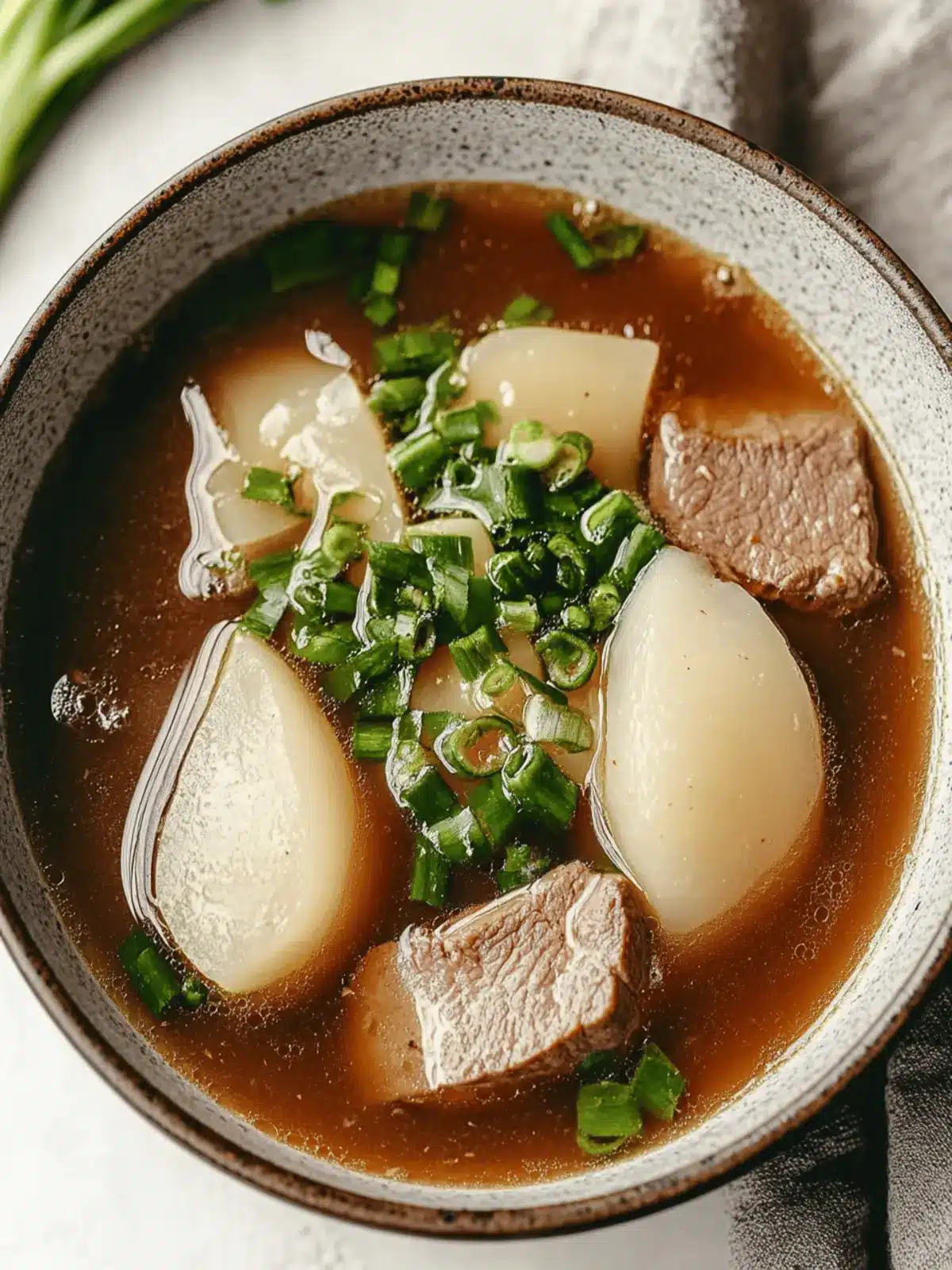
What to Serve with Korean Winter Soup?
Cozy up your dinner table with delightful pairings that enhance this comforting soup and create a full meal experience.
-
Steamed Rice: A classic pairing that soaks up the savory broth beautifully, elevating each spoonful to new heights of flavor.
-
Kimchi: Adds a spicy, tangy crunch, balancing the richness of the soup and introducing a traditional Korean element to your meal.
-
Savory Pancakes: Known as “Bindaetteok,” these crispy treats made from mung beans are perfect for dipping and complement the soup’s warm flavors.
-
Pickled Vegetables: A refreshing contrast, these crunchy bites cleanse the palate and provide a zesty kick that pairs perfectly with the hearty soup.
-
Sesame Spinach Salad: Light and vibrant, this dish brings fresh greens and a nutty flavor, adding a wonderful texture to your meal.
-
Korean Barley Tea: Served hot or cold, this herbal tea is a soothing accompaniment, enhancing the overall comfort of your dining experience.
Adding these delightful sides will transform your meal into a wholesome feast, while perfectly highlighting the rich and savory notes of the Korean winter soup.
Make Ahead Options
These cozy Korean winter soup preparations are perfect for busy home cooks! You can soak the beef short ribs and prepare the aromatics up to 24 hours in advance, storing them in the refrigerator for maximum freshness. Simply keep the soaked beef covered in a bowl of cold water to prevent any discoloration, and chop your ginger, garlic, and green onions, ready to infuse delight into your broth. When you’re ready to enjoy this comforting soup, just combine the prepped ingredients in a pot with water and follow the simmering instructions. You’ll find that this Korean winter soup is just as delicious and comforting, saving you time on those hectic weeknights!
Expert Tips for Korean Winter Soup
-
Skim for Clarity: Continuously skim off foam during simmering for a clear broth; this ensures a visually appealing and flavorful soup.
-
Taste as You Go: Always taste and adjust seasoning before serving. The flavors can vary based on the ingredients, so trust your palate!
-
Choose the Right Tofu: For optimal texture in your Korean winter soup, use firm tofu. This provides a sturdier bite compared to soft tofu, enhancing your dining experience.
-
Don’t Rush the Simmer: Allow the broth to simmer uncovered for the recommended time; this helps develop the deep, comforting flavors that make the soup so special.
-
Mix It Up: Feel free to adapt the vegetables based on what’s in season. Carrots or cabbage make excellent additions to your Korean winter soup!
Korean Winter Soup Variations
Feel free to make this Korean winter soup your own by exploring these delicious variations!
-
Vegetarian Delight: Swap beef for large portobello mushrooms or seitan for a hearty plant-based option. You’ll still experience that rich, soulful flavor without the meat.
-
Gluten-Free Switch: Use tamari or coconut aminos instead of guk ganjang to easily cater to gluten-free diets. This ensures everyone can enjoy the cozy warmth of this soup!
-
Extra Veggies: Enhance nutrition by adding seasonal veggies like carrots or cabbage. Not only do they enrich the flavor, but they also add beautiful color and texture to your dish.
-
Spicy Kick: For those who like a little heat, toss in a spoonful of gochujang (Korean chili paste) or sliced fresh chili peppers. This twist will elevate the warmth of the soup to a new level!
-
Creamy Option: For an indulgent twist, stir in a splash of coconut milk or almond milk towards the end of cooking. This will add a luscious creaminess that pairs beautifully with the savory flavors.
-
Flavor Boost: Experiment with different aromatics like lemongrass or cilantro stems for added depth. Their unique profiles will give the soup an exciting boost that surprises the taste buds!
-
Noodle Addition: To turn your soup into a comforting meal, add cooked noodles or udon. This transforms it into a satisfying dish, perfect for a cozy night in.
-
Herb Infusion: Finally, garnish your soup with fresh herbs like cilantro or parsley right before serving. Their fragrant aroma will brighten up the dish and add a delightful finishing touch!
Storage Tips for Korean Winter Soup
Fridge: Store leftover Korean winter soup in an airtight container for up to 3 days. Keep the soup cool to maintain freshness, and avoid leaving it out at room temperature.
Freezer: For longer storage, freeze the soup in portion-sized containers for up to 3 months. Leave some space at the top of the container, as liquids expand when frozen.
Reheating: To reheat, thaw the frozen soup in the refrigerator overnight, then gently reheat on the stove over low heat until warmed through. Stir occasionally for even heating.
Quality Reminder: For best flavor and texture, consume the soup within the recommended timeframes to enjoy the rich, comforting taste of this Korean winter soup!
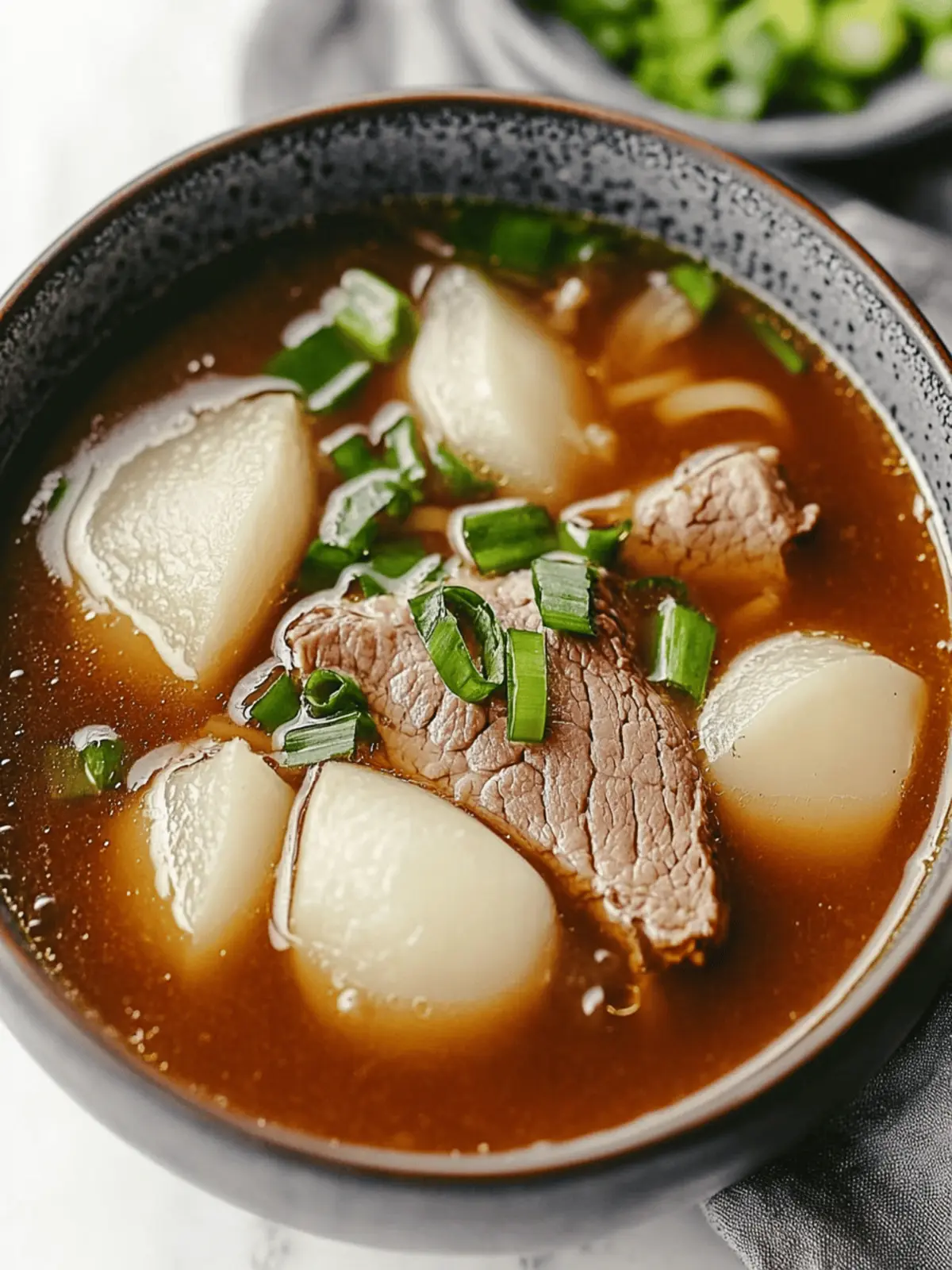
Korean Winter Soup Recipe FAQs
What is the best way to choose beef for Korean winter soup?
Absolutely! When selecting beef, look for cuts with good marbling, such as beef short ribs. This marbling ensures tenderness and adds rich flavor to the broth. If you’re opting for a vegetarian version, large portobello mushrooms or seitan can be excellent substitutes that mimic the meaty texture.
How should I store leftover Korean winter soup?
Very simply! Store the leftover Korean winter soup in an airtight container in the refrigerator for up to 3 days. Make sure it’s cooled down to room temperature before sealing to maintain its freshness. For longer storage, you can freeze it in portion-sized containers for up to 3 months.
Can I freeze Korean winter soup, and how should I do it?
Certainly! To freeze Korean winter soup, allow it to cool completely. Then, pour the soup into freezer-safe containers, leaving about an inch of space at the top since liquids expand when frozen. Seal tightly and label with the date for easy identification later. When ready to enjoy, thaw the soup in the refrigerator overnight, then gently reheat on the stove over low heat until warmed through.
What should I do if my soup tastes too salty?
If your Korean winter soup turns out too salty, don’t worry; it’s an easy fix! You can add diced raw potatoes to the soup and let it simmer for about 10-15 minutes. The potatoes will absorb some of the saltiness. Alternatively, add more broth or water to dilute the flavors; just make sure to taste and adjust with additional seasoning afterward.
Is this soup suitable for those with dietary restrictions?
Very much so! You can easily adapt the Korean winter soup to accommodate various dietary preferences. For a gluten-free option, substitute guk ganjang with tamari or coconut aminos. Additionally, if anyone has soy allergies, you can omit the tofu and increase the vegetable content for a nutritious meal. Always remember to double-check with your guests regarding their allergies or dietary restrictions before serving.
How can I enhance the broth flavor in my Korean winter soup?
For a deeper flavor, use a combination of fresh and dried ingredients. Try adding a few dried shiitake mushrooms or even a piece of kombu (seaweed) to the broth while simmering. This will add a wonderful umami depth to your Korean winter soup. Be sure to remove them before serving, as they can be rather tough. Enjoy these tips and get creative with your comforting bowl!
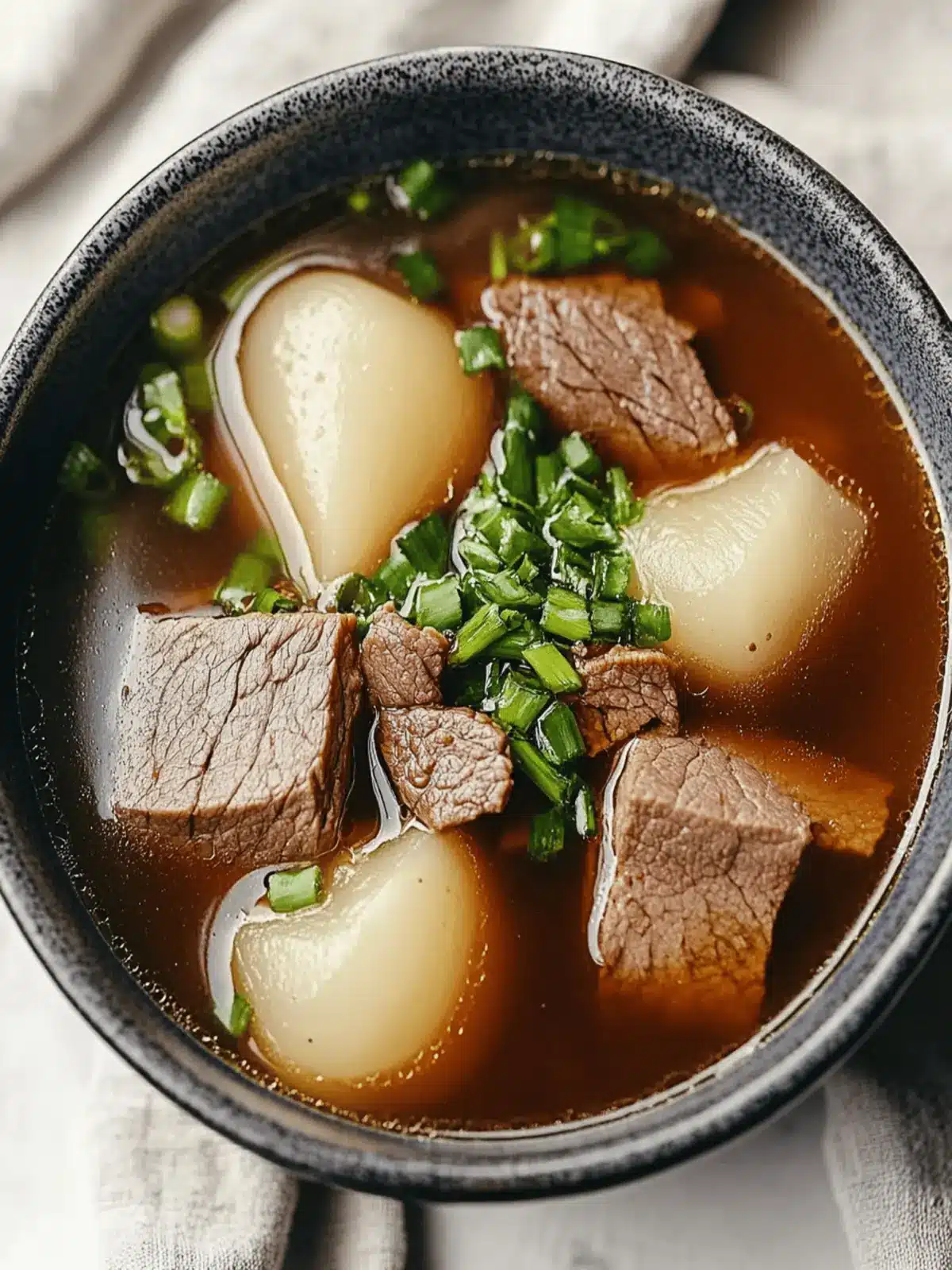
Cozy Korean Winter Soup: A Heartwarming Comfort Bowl
Ingredients
Equipment
Method
- Soak the beef short ribs in cold water for about 1 hour to remove excess blood.
- Prepare the aromatics by chopping the ginger, garlic, and green onions.
- In a large pot, combine the soaked beef ribs, prepared aromatics, and 10 cups of water. Bring to a boil.
- Reduce heat to medium, skim off any foam, and simmer uncovered for about 1 hour.
- Add radish slices into the pot, continue to simmer for an additional 20 minutes.
- Remove aromatics from the pot, season with guk ganjang, sea salt, and chopped garlic, then simmer for another 10 minutes.
- Serve warm, garnished with sliced green onions and pepper.