
As I stirred the wok, the vibrant colors of the vegetables danced before my eyes, while the warm aroma of curry wafted through the kitchen, wrapping me in a comforting embrace. This 30-minute Shrimp Mei Fun recipe has become my go-to for those evenings when I crave something satisfying but swift. With every bite, the chewy rice noodles mingling with succulent shrimp transport me to the bustling streets of Southeast Asia, where flavor takes center stage.
Perfect for busy weeknights or impromptu gatherings, this dish combines protein-rich shrimp and a medley of crisp vegetables, all brought to life by a subtly spicy curry blend. You’ll love that it’s not only easy to whip up, but it also delivers that quintessential takeout experience right at home. So, whether you’re shaking off the day’s stress or simply looking to impress at dinner, let’s dive into making these delightful Singapore noodles!

Why will you love Singapore Noodles with Shrimp?
Quick & Easy: In just 30 minutes, you can serve up a restaurant-quality meal that impresses friends and family alike.
Flavor Explosion: The combination of curry powder and fresh vegetables creates a symphony of flavors that’s both comforting and exciting.
Versatile: Customize with your choice of protein or veggies to easily cater to everyone’s preferences.
High-Protein & Fiber-Rich: Packed with shrimp and veggies, this dish not only satisfies cravings but also nourishes your body.
Crowd-Pleaser: Whether it’s a weeknight family dinner or a gathering, this dish is guaranteed to be a hit!
Singapore Noodles with Shrimp Ingredients
Get ready to whip up a delightful dish with these essential ingredients!
For the Noodles
- Dried Rice Noodles – The heart of this dish, offering a chewy base; check package instructions for soaking specifics.
- Dark Soy Sauce – Enhances color and sweetness; if you prefer a lighter taste, use more light soy sauce.
For the Shrimp
- Shrimp – The star protein, providing flavor and texture; opt for peeled and deveined shrimp.
- Shaoxing Wine – A traditional addition that removes any fishy taste; substitute with dry sherry if needed.
For the Stir-Fry
- Vegetable Oil – Essential for frying; can substitute with peanut or canola oil for different flavors.
- Shallots – Build aromatic sweetness in your stir-fry; red onions can work in a pinch.
- Ginger – Infuses warmth and spice; feel free to add minced garlic for an extra flavor boost.
- Spring Onions – Adds freshness and crunch; scallions are a great alternative.
Veggies & Seasonings
- Carrot – Provides color and sweetness; feel free to mix in bell peppers or snap peas for variety.
- Curry Powder – Defines that signature flavor profile; to make it more vibrant, add turmeric.
- Fish Sauce – Adds depth and umami; can be omitted for a vegetarian twist.
- White Sugar – Balances flavors and enhances sweetness; adjust according to personal preference.
- Salt & White Pepper – Essential for seasoning; remember to adjust based on the saltiness of your soy sauce.
For the Finish
- Eggs – Binds the dish together and adds protein; scramble until just set to keep them lush and moist.
- Sesame Oil – For that nutty aroma and rich flavor; don’t swap this out for olive oil—it’s irreplaceable!
Gather these ingredients, and you’ll be on your way to mastering Singapore Noodles with Shrimp in no time!
How to Make Singapore Noodles with Shrimp
-
Soak Noodles: Place the dried rice noodles in hot water for 10-20 minutes until they’re soft and pliable. Drain and rinse them under cold water, then toss with dark soy sauce and sesame oil for a burst of flavor.
-
Marinate Shrimp: In a bowl, combine the shrimp with Shaoxing wine and light soy sauce. This not only enhances taste but also helps eliminate any fishy flavors.
-
Cook Shrimp: Heat vegetable oil in a hot wok. Stir-fry the marinated shrimp until they’re fully cooked and turn pink, about 3-4 minutes. Once done, remove from the wok and set aside.
-
Sauté Aromatics: In the same wok, add ginger, chopped shallots, and spring onions. Stir-fry for about 1-2 minutes until fragrant, filling your kitchen with delicious aromas.
-
Add Vegetables: Toss in julienned carrots and any additional vegetables you like. Fry until slightly softened, about 2-3 minutes, allowing their flavors to mingle.
-
Spice It Up: Stir in curry powder and any additional sauces, ensuring everything is well-combined for just about a minute.
-
Scramble Eggs: Pour beaten eggs into the wok and scramble until almost set, about 1-2 minutes, to maintain moisture. Then, add the soaked noodles and mix thoroughly.
-
Combine Everything: Add the cooked shrimp back to the wok, stirring everything together until heated through. Adjust seasoning with salt and white pepper to taste, and serve hot!
Optional: Garnish with extra spring onions or sesame seeds for added texture and flavor.
Exact quantities are listed in the recipe card below.
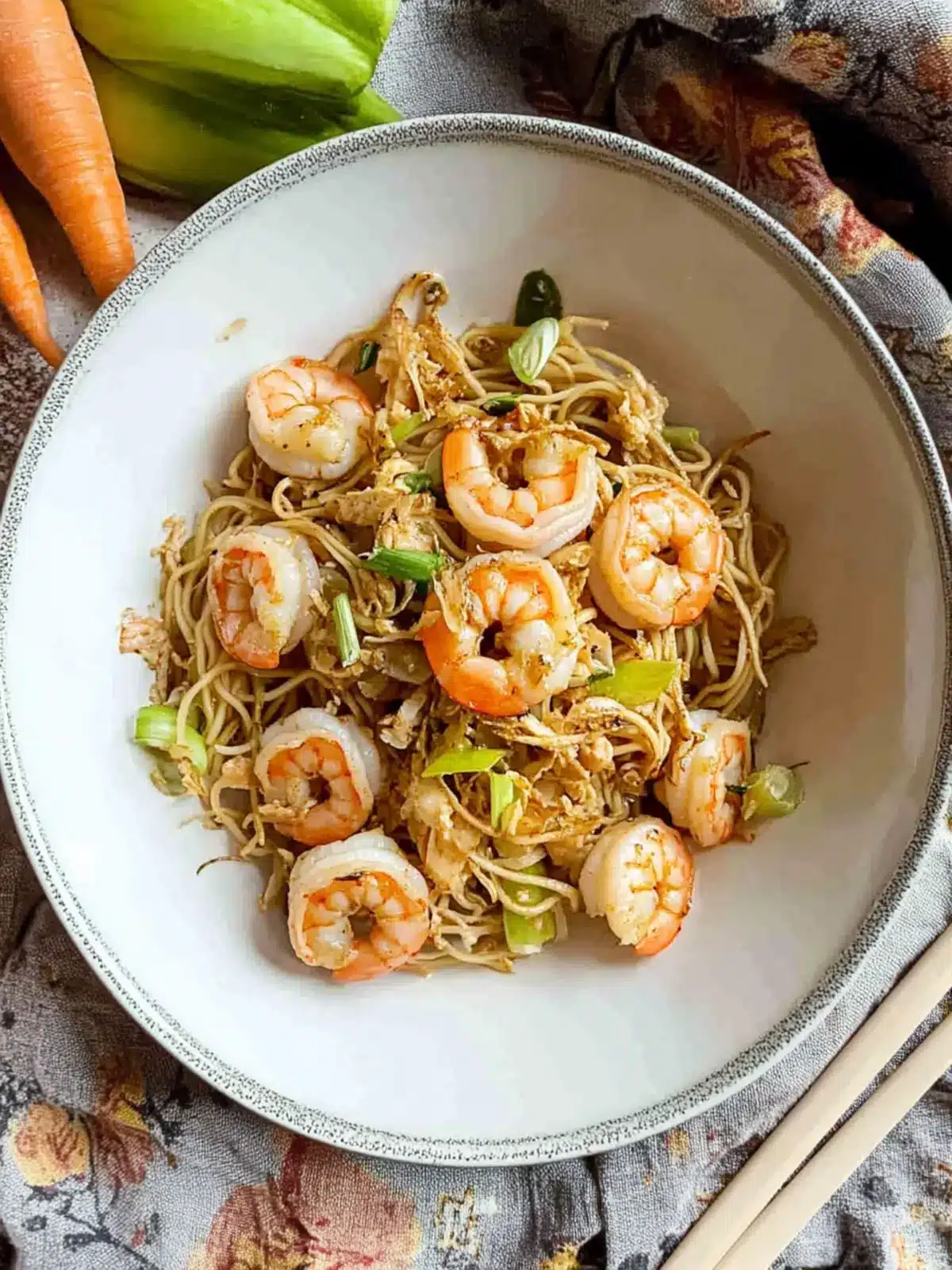
Variations & Substitutions for Singapore Noodles with Shrimp
Feel free to get creative with this recipe—tailoring the dish to your tastes and dietary preferences is what makes cooking at home so rewarding!
-
Meat-Free: Swap shrimp for chicken, tofu, or tempeh for a delicious vegetarian option.
-
Extra Veggies: Add bell peppers, bok choy, or snap peas to boost nutrition and flavor; they can add vibrant colors and textures too!
-
Spicy Kick: For those who love heat, sprinkle in chili flakes or toss in fresh chili peppers; be generous for a fiery burst!
-
Gluten-Free: Use gluten-free soy sauce and rice noodles to cater to dietary restrictions while maintaining scrumptious flavor.
-
Coconut Milk: For a creamy twist, stir in a splash of coconut milk when adding the vegetables; it adds a rich depth and softness.
-
Zoodles: For a low-carb alternative, replace rice noodles with spiralized zucchini (zoodles); a delightful way to lighten the dish.
-
Fruity Twist: Incorporate diced pineapple or mango for a sweet and tangy surprise that perfectly balances the savory elements.
-
Herb Infusion: Toss in some fresh cilantro or basil just before serving; the fresh herbs elevate the dish and add a fragrant aroma.
Customize your Singapore Noodles with Shrimp to your heart’s content, and savor the journey of flavors and textures that emerge with each choice!
What to Serve with Singapore Noodles with Shrimp?
Elevate your dining experience by pairing these vibrant noodles with complementary dishes that enhance every bite.
-
Crispy Spring Rolls: These crunchy delights add a satisfying texture contrast, with refreshing fillings that balance the flavors of the noodles.
-
Asian Cucumber Salad: A cool, tangy side that brings a refreshing crunch, this salad complements the warmth of the curry and balances the meal.
-
Mango Sticky Rice: For dessert, the sweet creaminess of mango sticky rice creates a luscious end to your meal, rounding out the savory shrimp noodles beautifully.
-
Spicy Thai Basil Chicken: If you’re in the mood for more heat, this dish brings robust flavors that pair perfectly with the mild curry of the noodles.
-
Hot and Sour Soup: The bold flavors and warmth of this soup provide a delightful contrast, making it an inviting start to your meal.
-
Tsingtao Beer or Green Tea: To drink, a refreshing Tsingtao beer enhances the flavors of the shrimp, while green tea provides a soothing counterpart that cleanses the palate.
Feel free to mix and match these pairings for a delightful experience that celebrates the vibrant tastes of Southeast Asia!
Make Ahead Options
These Singapore Noodles with Shrimp are perfect for meal prep enthusiasts! You can marinate the shrimp with Shaoxing wine and light soy sauce up to 24 hours in advance, which enhances the flavor while saving time on busy weeknights. Additionally, you can chop the vegetables and store them in the refrigerator for up to 3 days. When you’re ready to serve, simply stir-fry the shrimp and aromatics, then toss in the noodles and vegetables and follow the cooking instructions. Rest assured, with this prep, you’ll enjoy a dish that’s just as delicious as if you made it fresh!
Helpful Tricks for Singapore Noodles with Shrimp
- Perfect Noodle Texture: Soak your dried rice noodles for only 10-20 minutes. Over-soaking can lead to mushy noodles that lose their chewy texture.
- Shrimp Mastery: Avoid overcooking shrimp by cooking them separately. Add them back at the end to retain their tender texture in your Singapore noodles.
- Heat Matters: Always use a large, hot wok for stir-frying. This ensures even cooking and prevents the ingredients from steaming instead of frying, enhancing flavors.
- Flavorful Upgrades: Consider adding a pinch of MSG or chicken stock powder for authentic restaurant-style flavor in your dish.
- Veggie Variations: Don’t hesitate to experiment with different vegetables like bell peppers or snap peas for extra color and nutrition—just ensure they’re cut evenly for consistent cooking!
How to Store and Freeze Singapore Noodles with Shrimp
-
Fridge: Store leftovers in an airtight container for up to 2-3 days. The noodles may soften upon reheating, but they can still be enjoyed warm or at room temperature.
-
Freezer: For longer storage, freeze in a freezer-safe container for up to 2 months. To reheat, thaw overnight in the fridge and warm gently in a skillet or microwave until heated through.
-
Reheating: When reheating, add a splash of water or a drizzle of sesame oil to help revive the noodles and prevent them from sticking together. Stir until heated evenly.
-
Tip: While the Singapore noodles with shrimp are best fresh, storing properly ensures you can always enjoy this tasty dish whenever you like!
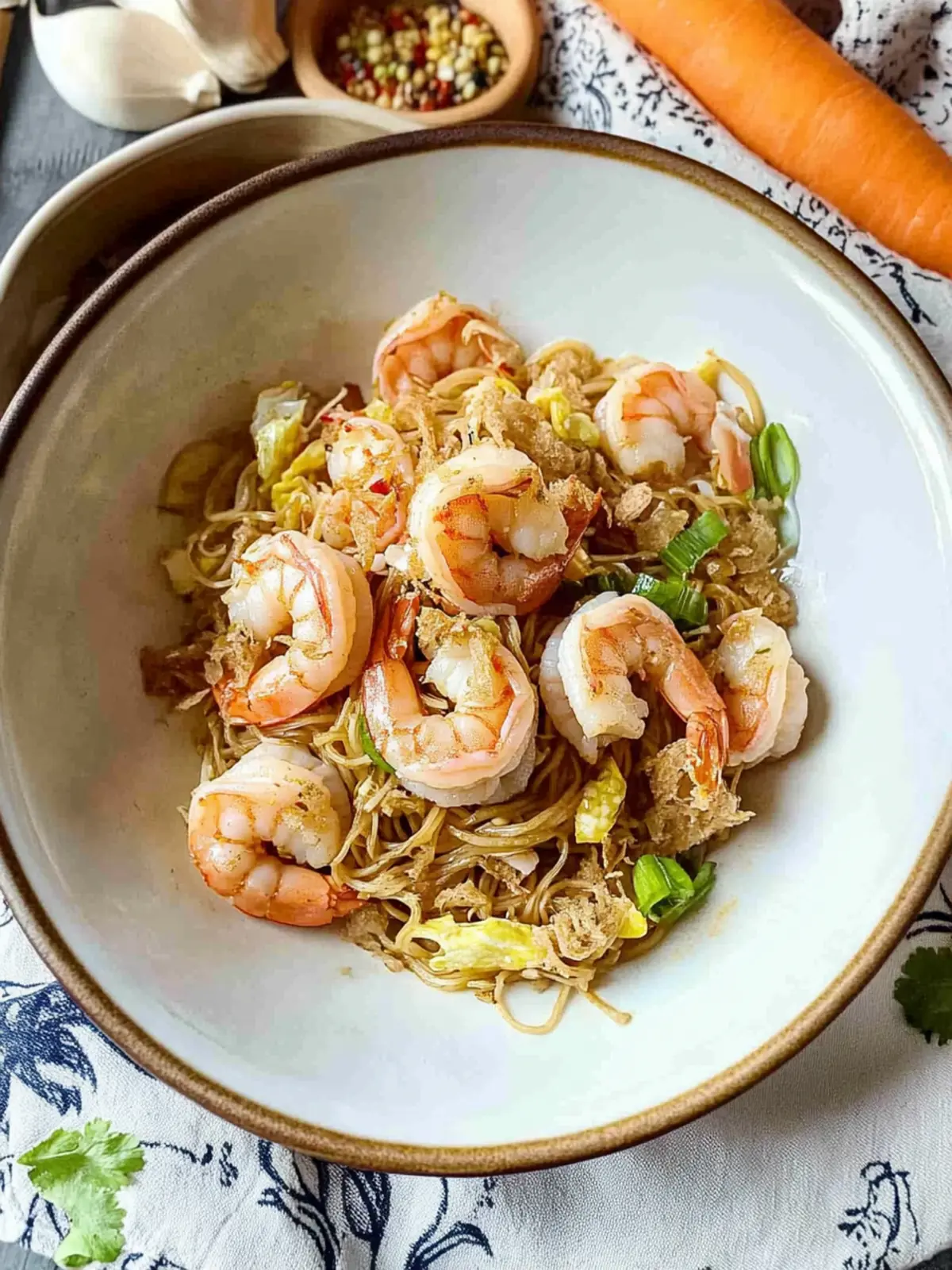
Singapore Noodles with Shrimp Recipe FAQs
How do I choose the right shrimp for this recipe?
Absolutely! Look for shrimp that are firm and translucent with a slightly sweet smell; they should have no black spots or signs of freezer burn. Fresh shrimp are best, but you can also use frozen ones—just make sure they are peeled and deveined.
How should I store leftovers of Singapore Noodles with Shrimp?
I recommend placing any leftovers in an airtight container and refrigerating for up to 2-3 days. The noodles may feel softer upon reheating, but they retain their delicious flavor. If you want to enjoy them later, consider freezing them for longer storage.
Can I freeze Singapore Noodles with Shrimp?
Yes, absolutely! To freeze, transfer the cooled noodles to a freezer-safe container, ensuring it’s sealed well. They can be stored for up to 2 months. For best results, thaw overnight in the fridge before reheating.
What if my rice noodles become mushy while cooking?
The trick is to monitor the soaking time closely—10 to 20 minutes is ideal. If they become mushy, this usually means they were soaked too long. If this happens, you can resurrect them slightly by tossing them in a hot wok with a bit of oil for a minute to firm them back up.
Is this dish suitable for someone with seafood allergies?
This dish is not suitable for those with seafood allergies due to the shrimp. However, you can easily make a delicious vegetarian version by substituting the shrimp with tofu or assorted vegetables. Always double-check other ingredients for allergens as well!
What kinds of vegetables can I add to my Singapore Noodles with Shrimp?
The more, the merrier! Feel free to get creative—try adding bell peppers, snap peas, or bok choy. Just ensure they’re sliced thinly for even cooking with the noodles, keeping a delightful crunch in every bite.

Savor Singapore Noodles with Shrimp in Just 30 Minutes
Ingredients
Equipment
Method
- Soak noodles in hot water for 10-20 minutes until soft. Drain, rinse with cold water, and toss with dark soy sauce and sesame oil.
- Marinate shrimp with Shaoxing wine and light soy sauce.
- Heat vegetable oil in a wok. Stir-fry marinated shrimp until cooked and pink, about 3-4 minutes. Remove and set aside.
- Sauté ginger, shallots, and spring onions in the same wok for 1-2 minutes until fragrant.
- Add julienned carrots and any additional veggies, frying for 2-3 minutes.
- Stir in curry powder and other sauces for about a minute.
- Pour in beaten eggs, scrambling until almost set. Then, add soaked noodles and mix thoroughly.
- Combine shrimp back into the wok, stirring until everything is heated through. Adjust seasoning with salt and white pepper.